

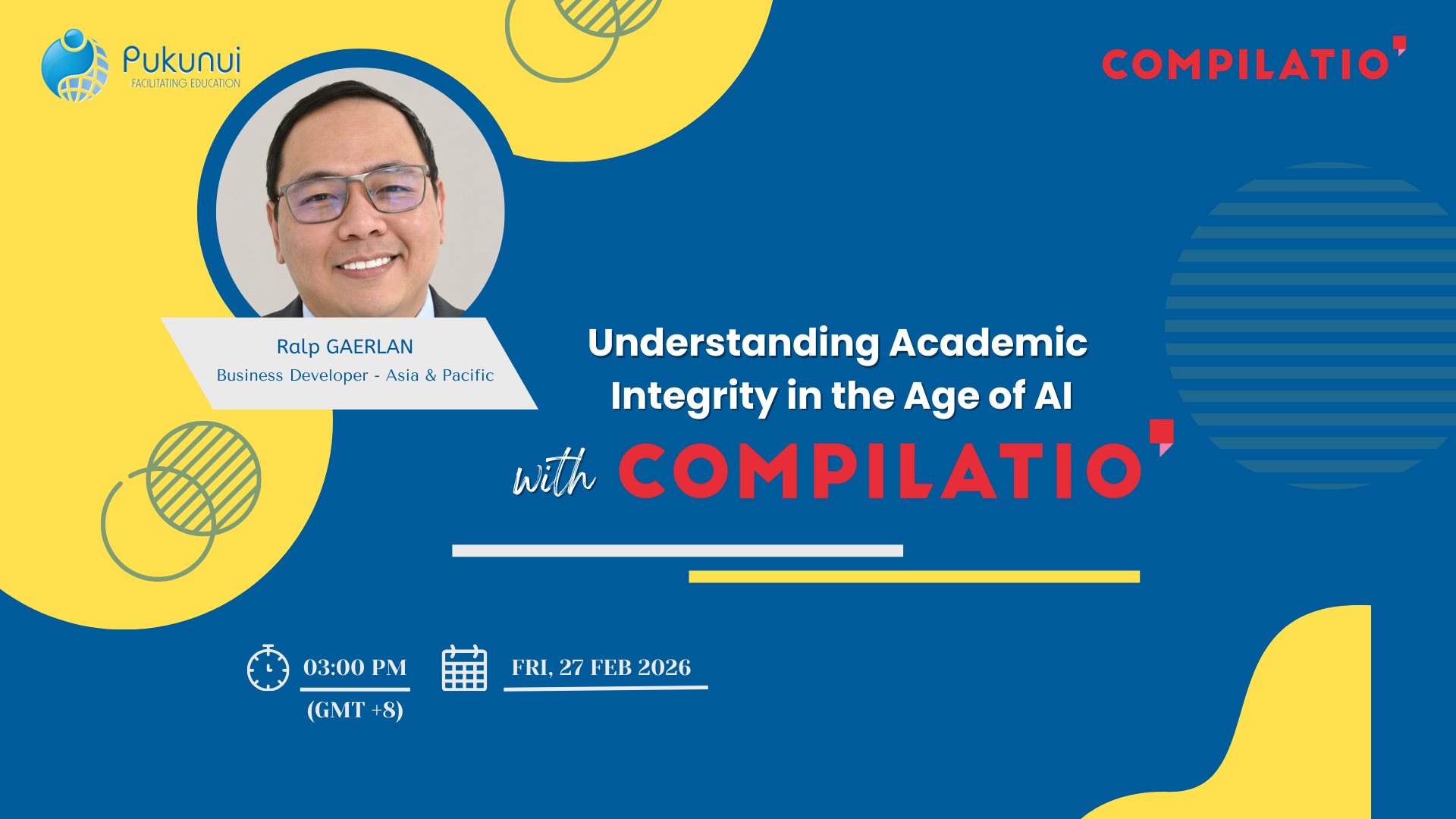
As generative AI changes how students research, write and complete assignments, educators need more than detection tools. Discover how a balanced approach combining technology, human judgement and clear academic expectations can help institutions uphold academic integrity.
The Changing Meaning of Academic Integrity
Generative AI has changed the way students approach learning and assessment. From brainstorming ideas and improving written work to generating entire responses, AI tools are increasingly part of the academic landscape.
For educators, this creates a difficult question: how do we distinguish legitimate AI-assisted learning from academic misconduct?
The conversation is not entirely new. When calculators and the internet became widely available, educators also had to reconsider how students accessed information and demonstrated their understanding. Generative AI represents another significant shift, but one that requires institutions to rethink traditional approaches to assessment and academic integrity.
Rather than focusing exclusively on preventing students from using AI, institutions need to establish clear expectations for its responsible use while ensuring that submitted work genuinely reflects students’ learning and understanding.
This was the central theme of Pukunui’s #LearnWithPukunui webinar, Understanding Academic Integrity in the Age of AI with Compilatio, featuring Ralph from Compilatio.
The session explored emerging forms of academic misconduct, the role and limitations of AI detection, and how Compilatio integrates with Moodle to support educators in reviewing student submissions.
1. Academic Misconduct Is Evolving
Traditional plagiarism often involved copying text from published sources or another person’s work without proper acknowledgement.
However, generative AI has introduced more complex challenges.
Students may now use AI to:
- Paraphrase existing content to make copied material less recognisable.
- Generate references or citations that may not exist.
- Produce complete assignments or sections of written work.
- Outsource critical thinking, analysis and interpretation.
- Modify AI-generated content to make it appear more like their own writing.
These practices can make academic misconduct harder to identify through conventional similarity checking alone.
It is also important to recognise that not every use of AI constitutes misconduct. Students may use AI tools for language improvement, brainstorming or editing, depending on the institution’s policies and assessment requirements.
The challenge for educators is therefore not simply identifying AI-generated text. It is understanding how AI has been used and whether that use aligns with the intended learning outcomes and academic expectations.
2. AI Detection Is an Indicator, Not a Verdict
One of the most important messages from the webinar was that AI detection results should not be treated as definitive proof of academic misconduct.
No detection tool offers complete accuracy. A report may highlight content that requires further investigation, but it cannot independently establish a student’s intention or determine whether a breach of academic integrity has occurred.
During the session, Ralph introduced an analogy that makes this distinction easier to understand: AI detection tools are like metal detectors.
A metal detector can identify something that requires attention, but it cannot tell you exactly what the object is or why it is there. Further investigation is necessary.
The same principle applies to AI detection.
A flagged submission should prompt educators to examine the work more closely, consider the surrounding evidence and, where appropriate, discuss the submission with the student.
This approach helps prevent institutions from relying too heavily on automated results when making decisions that could have significant consequences for learners.
3. Beyond Traditional Similarity Checking: Introducing Magister+
Traditional plagiarism detection focuses on identifying similarities between submitted work and existing sources. However, AI-assisted misconduct can involve techniques that are not always captured through conventional similarity checking.
During the webinar, Ralph demonstrated Magister+, Compilatio’s solution for identifying suspicious patterns and potential manipulation in submitted documents.
The demonstration explored how the tool can help identify:
- Syntactic similarities and unusual patterns in writing.
- Hidden text manipulation.
- Invisible characters that may be used to alter how content is interpreted.
- Other indicators that may warrant further examination.
These capabilities provide educators with additional information when reviewing student submissions.
However, the purpose is not to replace academic judgement. Magister+ acts as an additional screening layer, helping educators identify areas that may require closer attention.
This distinction is particularly important as students become more familiar with AI tools and the different ways generated content can be modified before submission.
4. Bringing Academic Integrity Checks into Moodle
Detection tools are more useful when they fit naturally into an institution’s existing assessment workflow.
For institutions using Moodle, Compilatio integration allows educators to access analysis reports within the assignment process.
Instead of moving between separate systems to review student submissions, educators can work within Moodle and access the relevant reports as part of their assessment activities.
The webinar demonstrated how Compilatio can be integrated into Moodle Assignments, allowing submitted work to be analysed automatically.
This can help institutions:
- Incorporate similarity and AI-related checks into existing assessment workflows.
- Review reports alongside student submissions.
- Reduce the need for separate manual processes.
- Apply a more consistent approach to reviewing submitted work.
- Manage report visibility according to institutional settings.
The integration also supports different approaches to report access. Institutions can configure whether reports are visible to students or restricted to educators, depending on their requirements.
Importantly, the analysis takes place in the background and does not interrupt the grading workflow, as explained during the session.
5. Human Judgement Remains Essential
Technology can identify patterns, generate reports and highlight unusual activity. However, it does not have the full context that an educator brings to an assessment.
An educator may understand a student’s writing style, previous performance, subject knowledge and development throughout a course. These details can help determine whether a flagged submission genuinely requires further investigation.
For example, a student may have used an AI-powered writing assistant to improve grammar or sentence structure. Grammarly and similar tools can use AI-based features, and the webinar highlighted that such assistance may sometimes be flagged by detection systems.
This does not automatically mean that the student has submitted AI-generated work in breach of academic policy.
Educators need to distinguish between different forms of AI assistance and consider whether the student’s use complies with the institution’s guidelines.
A responsible review process should therefore involve:
- Reviewing the detection or similarity report.
- Examining the flagged sections in the context of the complete submission.
- Considering the student’s previous work and academic progress where relevant.
- Clarifying the institution’s expectations regarding AI-assisted work.
- Discussing concerns with the student before reaching a conclusion.
The objective should be to make informed decisions rather than relying solely on automated scores or indicators.
6. Data Privacy and Responsible Document Processing
Academic integrity solutions handle student submissions, which may contain personal information and other sensitive academic records.
Institutions therefore need to consider how submitted documents are processed, stored and managed.
During the Q&A, Ralph discussed Compilatio’s approach to data protection and its compliance with GDPR requirements. He also explained that institutions have options for managing document storage and deletion.
For institutions evaluating an academic integrity solution, it is important to understand the applicable data protection arrangements, including:
- How student submissions are processed.
- Where documents and reports are stored.
- How long submitted documents are retained.
- Who can access reports and associated data.
- How document deletion and data management are handled.
These considerations should form part of the institution’s wider digital governance and academic integrity policies.
7. Building an Academic Integrity Culture, Not Just a Detection Process
The availability of AI detection tools does not, by itself, create a culture of academic integrity.
Institutions also need to help students understand what responsible AI use looks like in their academic environment.
This means communicating clear expectations before assessments begin.
For example, educators should explain:
- Whether AI tools are permitted for a particular assessment.
- Which types of AI assistance are acceptable.
- Whether students need to acknowledge or disclose their use of AI.
- What constitutes unacceptable AI-generated or AI-assisted submissions.
- How academic integrity concerns will be reviewed.
Assessment design also plays an important role. Activities that require students to explain their reasoning, apply knowledge to specific contexts, reflect on their learning or demonstrate practical skills can provide additional opportunities to evaluate genuine understanding.
Ultimately, academic integrity should be treated as an educational responsibility shared by institutions, educators and learners.
Detection tools can support this process, but clear policies, meaningful assessment design and open conversations remain essential.
Key Takeaways for Educators and Institutions
The webinar highlighted several considerations for institutions navigating academic integrity in the age of generative AI.
1. AI has changed the nature of academic misconduct. Traditional plagiarism checks may not be sufficient to identify every form of AI-assisted misconduct or document manipulation.
2. Detection results require human interpretation. AI detection should be used as an indicator for further investigation, not as automatic proof of wrongdoing.
3. Additional screening capabilities can support educators. Tools such as Compilatio Magister+ can help identify suspicious patterns and hidden document manipulation.
4. Moodle integration can simplify assessment workflows. Embedding academic integrity checks within Moodle Assignments allows educators to access reports as part of their existing processes.
5. Clear institutional policies are essential. Students and educators need shared expectations about acceptable and unacceptable uses of AI.
6. Academic integrity is about more than detection. The long-term goal is to develop responsible learners who understand how to use technology ethically and meaningfully.
Watch the Webinar and Get Your Certificate!
How can your institution respond to the challenges of generative AI while maintaining trust in the assessment process?
Watch the recording of Understanding Academic Integrity in the Age of AI with Compilatio, featuring Ralph from Compilatio, to explore the discussion and see the Magister+ demonstration.
Interested in integrating Compilatio with your Moodle LMS?
Pukunui can help your institution explore Moodle integration options and consider how academic integrity tools can fit into your existing assessment workflows.
Contact Pukunui Malaysia: hello.my@pukunui.com
#LearnWithPukunui brings together educators, technology partners and learning practitioners to explore practical approaches, emerging technologies and ideas shaping the future of digital learning.
